
Getting a loan feels simple in theory — you apply, wait for verification, and get the money. But in reality, many people face repeated rejections from banks and loan apps. Some apply again and again, hoping for a different result, but the outcome remains the same: “Your loan application has been declined.”
If this sounds familiar, you are not alone. There are millions of people who never get loan approval, not because they are bad borrowers, but because they are unaware of the reasons behind rejection.
This article explores the real, practical, human reasons why some people struggle to get approved — and what you can do to improve your chances.
1. Poor or No Credit Score History
One of the biggest reasons behind loan rejection is a low credit score or zero credit history.
Why it happens:
Late EMI payments
Credit card overdue
Taking too many small loans
Not having any previous credit record
Banks trust people who have shown good repayment behavior in the past. If you never took a loan before, the bank has no proof you can repay one now.
Human Tip:
Start by building small credit. Use a credit card wisely or take a small secured loan. Build a positive repayment history for 6–12 months.
2. Unstable or Irregular Income
Lenders want to see stable monthly income.
People with irregular income — such as freelancers, gig workers, daily wage earners, or small business owners — often get rejected.
Why lenders reject:
Income changes monthly
No fixed salary statement
High financial risk
Even if you earn well, lenders prefer consistency over high amounts.
Human Tip:
Show at least 6–12 months of consistent bank deposits, even if income varies. Banks love stability more than numbers.
3. High Debt-to-Income Ratio
If your income is Rs 50,000 but your existing EMIs take away Rs 25,000, your debt-to-income ratio becomes too high.
Lenders hesitate because:
Too much of your income is already committed
Risk of default is higher
Borrower may struggle to pay more EMIs
Human Tip:
Keep your total EMIs below 40% of your income. If already high, close some loans before applying for a new one.
4. Multiple Loan Applications in a Short Time
Many people apply to:
3 banks
5 loan apps
2 NBFCs
1 credit card
…all within the same month.
This damages your credit score.
Every time you apply, the lender checks your credit report, which creates a hard inquiry. Too many inquiries look like you’re financially desperate.
Human Tip:
Apply only to one or two reliable lenders. Too many applications equal instant rejection.
5. Incorrect or Incomplete Documentation
A huge number of applications are rejected because of simple mistakes like:
Wrong CNIC / ID card number
Unclear bank statements
Fake salary slips
Mismatched signatures
Missing documents
Banks and apps cannot approve incomplete or suspicious documents.
Human Tip:
Double-check everything. Ensure your documents are clean, updated, and clearly readable.
6. Unverifiable Employment Details
If your employer cannot be verified, your loan is likely to be rejected.
Common causes:
Working in a very small business
No official HR department
Your employer doesn’t respond
You provided an incorrect HR number
Lenders need confirmation that you actually work where you claim.
Human Tip:
Provide correct HR details, office numbers, and proof of employment. Even a work letter helps.
7. Your Bank Account Shows Financial Stress
Yes, lenders check your bank statement carefully. They look for:
Negative balances
Low balance throughout the month
Frequent withdrawals
No healthy savings
Too many transfers from loan apps
These signs make you look financially unstable.
Human Tip:
Keep your bank account healthy. Maintain a minimum balance, avoid unnecessary withdrawals, and show proper income deposits.
8. You Work in a High-Risk Industry
Some industries are considered unstable, seasonal, or unpredictable.
Examples:
Real estate agents
Commission-based jobs
Small shop workers
Daily labor work
Contract employees
Banks prefer customers with long-term job security.
Human Tip:
Show additional proof like:
Side income
Rental income
Freelancing earnings
This reduces perceived risk.
9. Age-Related Restrictions
People too young (18–21) or too old (above 60) often face rejection.
Why?
Lenders believe the risk is higher.
Human Tip:
If you are young, start by building credit with small loans. If older, apply for shorter-tenure loans.
10. Suspicious or Inconsistent Information
If your application has mismatched information such as:
Different salary in bank account vs salary slip
Address doesn’t match
Job title differs from company records
Fake documents
The result is instant rejection.
Human Tip:
Be 100% honest. Lenders cross-check everything digitally.
11. Poor Relationship With the Bank
If you have a history of:
Returned cheques
Overdraft misuse
Account inactivity
Old loan defaults
Your bank will hesitate to approve new credit.
Human Tip:
Rebuild trust by maintaining a clean account for 6–12 months.
Conclusion: Why Some People Never Get Loan Approval
Loan rejection is not the end — it’s feedback.
Most people never get approval because they don’t understand the system. Loans are not just about asking for money; they are about proving that you can repay it reliably.
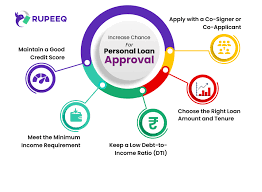
To improve your chances:
Build a good credit score
Maintain stable income
Apply with correct documents
Control your existing loans
Keep your bank account healthy
Apply only to trusted lenders
With the right strategy and patience, anyone can turn “Rejected” into “Approved.”