
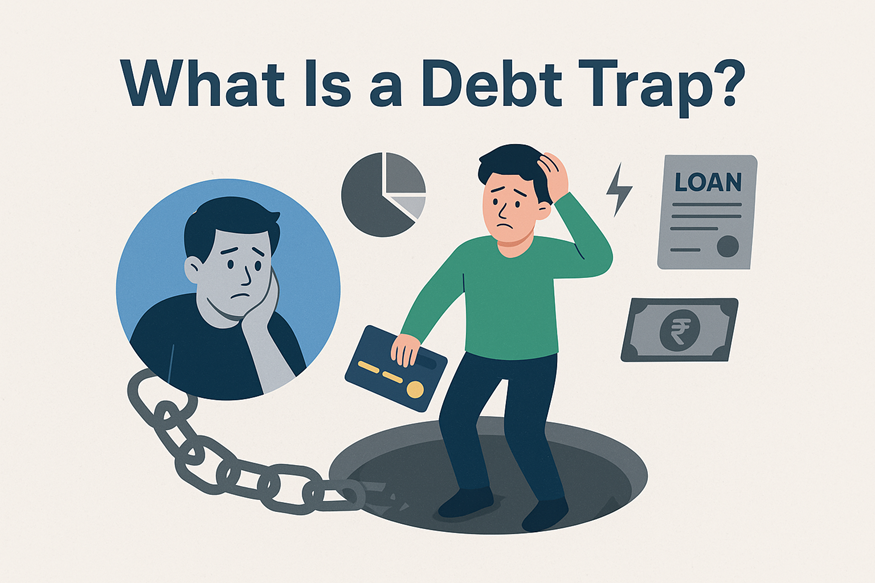
In today’s fast-paced financial world, taking loans has become easier than ever. With just a few clicks, you can apply for a personal loan, use BNPL services, or get instant credit from digital lending apps. While loans can be helpful during emergencies or large expenses, they can also become dangerous if you don’t manage them wisely. Many people fall into what is known as a “loan trap” — a situation where the borrower becomes stuck in a cycle of debt, continuously taking new loans just to repay old ones.
Avoiding a loan trap is entirely possible if you follow the right approach and develop good financial habits. This article explains how you can protect yourself from loan traps and maintain control over your financial life.
What Is a Loan Trap?
A loan trap is a financial situation in which a borrower is unable to repay a loan on time and ends up taking multiple loans or extensions to cover previous debt. As a result, interest charges, late fees, and penalties keep growing, making it nearly impossible to escape.
People often fall into loan traps because of:
High-interest loans
Multiple loans at the same time
Unstable income
Poor money management
Impulsive spending
Lack of financial literacy
Understanding these causes is the first step in protecting yourself.
1. Borrow Only When Necessary
The biggest reason people fall into loan traps is borrowing without need. Loans should be used for essential and important expenses only, such as:
Medical emergencies
Education
House repairs
Important bills
Business needs
Avoid taking loans for non-essential items like gadgets, vacations, luxury shopping, or unnecessary upgrades. If the purchase can wait, it’s better to save money instead of borrowing.
2. Understand the Loan Terms Clearly
Before taking any loan—online or from a bank—always read the terms and conditions carefully. Many borrowers ignore the details and later face hidden charges they never expected.
Important things to check:
Interest rate (APR)
Processing fee
Late payment charges
Early settlement rules
Monthly installment amount
Tenure length
If anything is unclear, ask the lender directly. Never sign or accept a loan without full understanding.
3. Compare Different Lenders Before Choosing
Don’t rush into the first loan offer you see. Take your time to compare:
Interest rates
Processing charges
Required documentation
Customer reviews
Repayment flexibility
Banks often have lower interest rates compared to instant loan apps. Many loan traps begin with borrowers choosing high-interest lenders simply because they offer quick approvals. A little research can save you from years of stress.
4. Check Your Repayment Capacity Honestly
Before taking a loan, calculate your monthly budget. Your loan installment should never exceed 25%–30% of your monthly income. If EMIs cross this limit, you will struggle to manage other expenses and may end up borrowing again.
Ask yourself:
Can I easily afford the monthly payments?
What if my income decreases temporarily?
Do I have an emergency fund?
Borrow only the amount you can repay without stress.
5. Avoid Taking Multiple Loans Simultaneously
One of the fastest ways to fall into a loan trap is having multiple loans at the same time. People often take:
A personal loan
A mobile installment plan
A credit card loan
A BNPL service
Handling so many debts becomes complicated and expensive. Missing even one payment can trigger penalties across all accounts. Focus on closing one loan before taking another.
6. Build and Maintain an Emergency Fund
Unexpected expenses often push people toward instant loans. You can avoid this by creating an emergency fund worth 3 to 6 months of your essential expenses.
Save a small amount every month until you build that cushion. This fund will protect you during:
Job loss
Medical emergencies
Car/bike repairs
Family emergencies
With an emergency fund, you won’t have to rely on costly loans.
7. Avoid Emotional or Impulse Borrowing
Sometimes people take loans out of:
Pressure
Social comparison
Emotional decisions
Impulse buying
For example, buying a new phone because friends have it or taking a loan to impress someone. These emotional decisions are the root cause of loan traps. Always think logically before borrowing.
8. Keep Track of Your Loans and Expenses
Financial discipline is key. Maintain a record of:
Due dates
Installments
Remaining balance
Total monthly expenses
Use apps or simple spreadsheets to track your payments. This reduces the risk of late fees and keeps your finances organized.
9. Improve Your Financial Literacy
Understanding how loans, interest rates, and credit scores work empowers you to make better decisions. Read articles, watch videos, or follow financial experts. The more you learn, the better you protect yourself.
10. If You Are Stuck, Seek Help Early
If you feel you are slipping into a loan trap:
Contact your lender
Ask for a restructuring plan
Request an extension
Discuss reducing your monthly EMI
Banks and lenders often offer solutions. The worst thing you can do is ignore the problem.
Final Thoughts
Avoiding a loan trap is not difficult—it simply requires awareness, discipline, and responsible borrowing. Always remember that a loan is not free money; it is a financial responsibility that must be handled wisely. Borrow only when necessary, understand the terms, plan your repayments, and avoid unnecessary expenses.
By staying disciplined and informed, you can use loans as a helpful financial tool without letting them control your life.